

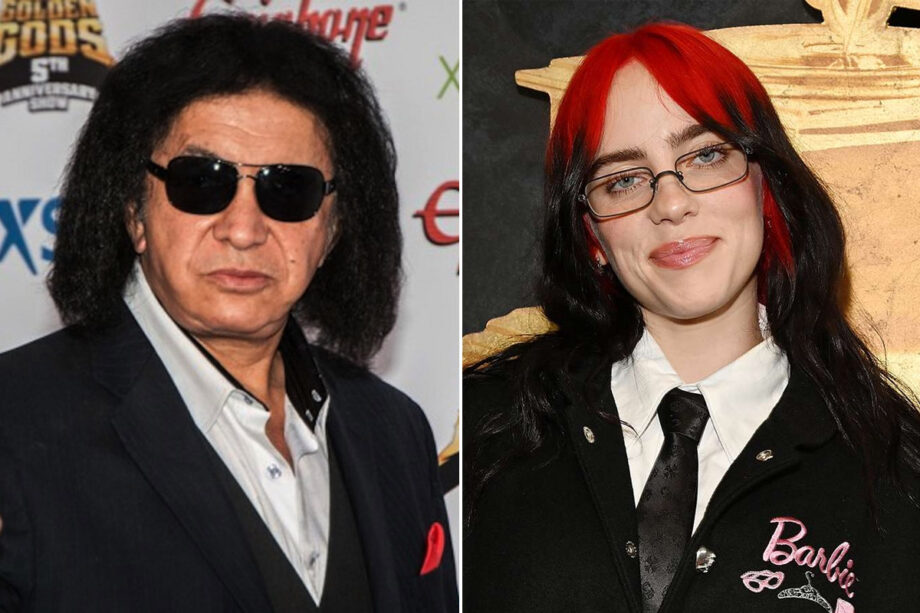
KISS icon Gene Simmons recently shared his thoughts on Billie Eilish’s claim that America is “stolen land,” expressing his views during an appearance on Andrew Gold. Simmons, who has previously stated that famous musicians and actors should not share their political opinions in public, addressed the criticism Eilish’s statement received from some music fans.
When asked, “Do you see the Billie Eilish thing about America being on stolen land?” Simmons responded by challenging the premise of the claim.
“Well, any Indian tribe that was at war with any other Indian tribe, which means all the Indian tribes tortured and killed each other, there’s no such thing as you’re living on bar land,” Simmons said. “The Apache were living on Comanche land and the Comanche killed the other one. They all fought and took over their own lands and took slaves, by the way.”

Simmons went on to explain that the different tribes had distinct cultures and histories, comparing the situation to the historical conflicts in Europe.
“And so this idea that it’s all what the Canadians called First Nations, well, yeah, if you make a general observation that they were all Indians in the general term, but the Mohawks and the Apache have nothing to do with each other,” Simmons continued. “Even over the hill, they had different languages, different customs.”
He then drew a parallel to European history and other global conflicts to illustrate his point about territorial disputes and cultural differences.

“It’s like looking at Europe, even though you know, you go 300 miles that way and it’s a different language, different culture,” Simmons added. “That’s why you guys have been killing each other for 2,000 years. And you’re worshiping the same God, which is nuts. You know, they’re all Christians, but Muslims are the same, too. You got the Shia against the Sunni and Wahhabist. And then, of course, you’ve got the Coptics there who were in Egypt first. So, it gets complex, but I’ll drown you with information you don’t want to know.”
This discussion highlights the ongoing debate surrounding artists expressing political views and historical interpretations.