

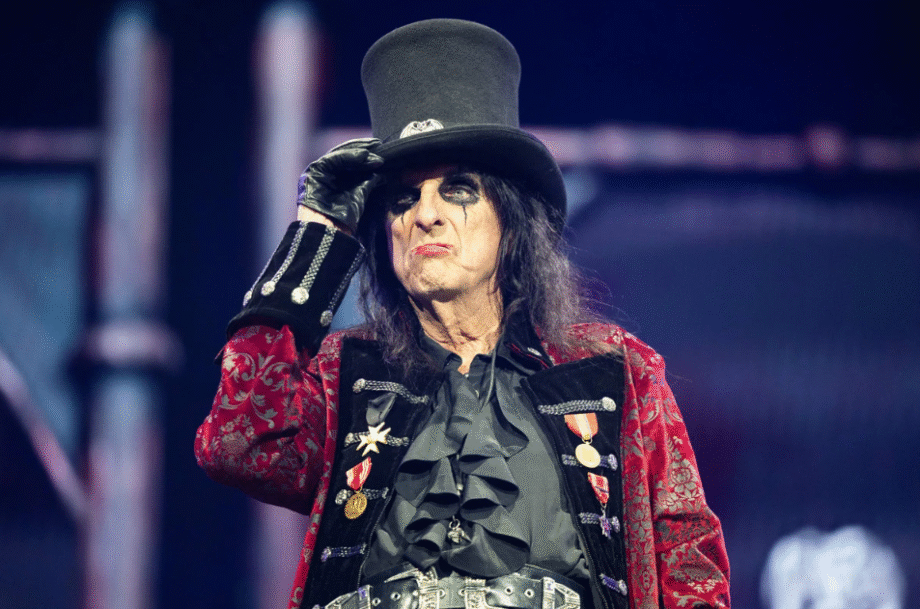
Rock icon Alice Cooper recently offered his thoughts on the challenges musicians face within the industry during an appearance on The Greg Laurie Show.
When asked why some artists fall into substance abuse or even take their own lives after achieving major success, Cooper suggested that true fulfillment requires a spiritual anchor. “I think if you don’t have the Lord in your life, you’re always going to be trying to fill that hole with something,” Cooper said. “It’s either going to be drugs, or it’s going to be Ferraris, or this, or that. And you’re never going to achieve it.”
The pioneering shock rocker reflected on how his career and personal life changed once he embraced Christianity, noting that his public declaration of faith surprised many in the music world.

“When I started proclaiming Christ, everybody thought, ‘Well, that’s the end of Alice Cooper,’” he continued. “But we’ve never done better, I mean on every level, since I’ve proclaimed Christ. It should have gone the other way. It should have absolutely ruined my career.”
Cooper’s comments highlight his belief that spiritual grounding can provide genuine stability and fulfillment in an environment often characterized by excess and emotional turmoil. His own journey represents a profound personal shift that began during one of the darkest moments of his life.
According to CBN News, Cooper once battled addiction so severely that he was warned he only had a month to live. Born Vincent Damon Furnier, he was raised in a Christian household as the son and grandson of preachers. Despite this upbringing, he drifted from his faith as fame brought him deeper into a lifestyle fueled by alcohol, drugs, and nonstop partying.

His return to Christianity came during a period of crisis marked by a failing marriage and life-threatening substance abuse. Harvest.org noted that Cooper has said a combination of fear of Hell and the love of Christ ultimately led him back to his faith. His recovery brought dramatic change—he has remained sober for over three decades and credits his transformation entirely to his faith. Rather than seeing Christianity as incompatible with his rock persona, Cooper insists he is not a “Christian rock star” but a rock musician who happens to be a Christian.
Cooper’s willingness to speak openly about his faith, while continuing to succeed in mainstream rock, has helped challenge stereotypes surrounding Christianity in the music world. Premier Christianity reported that his story has influenced fellow artists and public figures. His life narrative serves as a compelling example of redemption, showing that even those who have lived through extreme excess can find renewal. His experience offers hope to others battling addiction and searching for meaning beyond material achievements.