

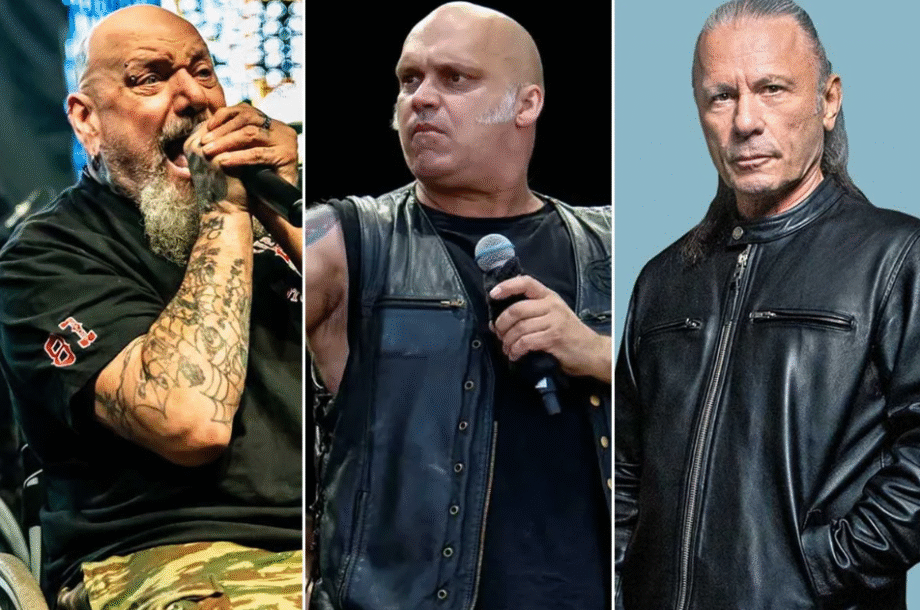
Blaze Bayley recently reflected on Iron Maiden’s formative years, offering high praise for the band’s original vocalist, Paul Di’Anno—remarks that may surprise some Bruce Dickinson fans. Speaking on The Classic Metal Show, Bayley, who fronted Iron Maiden between the Di’Anno and Dickinson eras, discussed the distinctive power of the band’s first two albums and Di’Anno’s lasting influence on metal.
“I think very sad to lose Paul because he was the legend much more than Bruce,” Bayley said. “And, you know, I’m just the bit in the middle for Iron Maiden. The interesting bit I like to think but Paul was a legend man. I worked with Paul, toured with Paul, and we did things where we shared the same band and there are some nights where you close your eyes and just listen when he had a good band with him and it’s like man this is better than a record.”
Bayley went on to emphasize the rebellious, rule-defying energy that Di’Anno brought to Iron Maiden’s early sound. “Those first two albums with Paul, it’s like forget what you think you know and what you think metal should do. This is the way they do it and that’s what made it special,” he continued. “So I really miss Paul.”

His comments highlight the distinct eras of Iron Maiden’s evolution, each defined by a different frontman’s style and influence.
Paul Di’Anno, who fronted Iron Maiden from 1977 to 1981, helped establish the New Wave of British Heavy Metal movement with his gritty, punk-inspired vocals. He recorded the band’s first two albums, Iron Maiden (1980) and Killers (1981), before being dismissed due to personal and substance-related issues. His departure marked the end of the band’s raw, underground phase—a time defined by its fierce energy and unfiltered creativity.
Bruce Dickinson stepped in as lead singer in 1981, debuting on The Number of the Beast (1982). His soaring, operatic voice and commanding stage presence propelled Iron Maiden to global fame, earning the band multiple platinum albums throughout the 1980s and 1990s. His era solidified Iron Maiden’s sound and status as one of metal’s most influential acts.

Bayley joined the band in 1994 after Dickinson’s departure, recording The X Factor (1995) and Virtual XI (1998). Although his tenure faced commercial challenges and vocal strain issues, it represented a unique and experimental chapter in the group’s history.
When Dickinson rejoined in 1999, Iron Maiden experienced a powerful resurgence that continues today. Still, Bayley’s reflections reveal enduring respect for Di’Anno’s groundbreaking contributions—the raw passion and fearless spirit that helped shape Iron Maiden’s earliest identity and laid the foundation for everything that followed.