


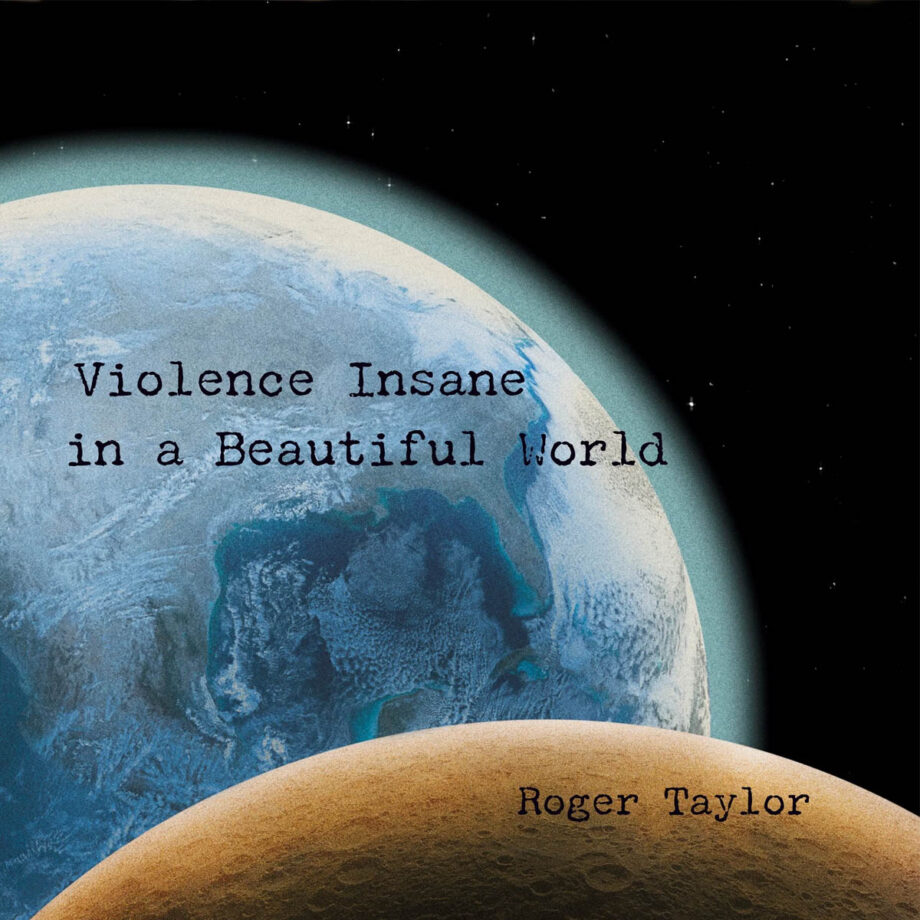
Roger Taylor’s Violence Insane in a Beautiful World lands as a late-career solo record that pushes the political streak in his earlier work further. It arrived on 18 September 2026 on Columbia, runs 41:35, and stands as his seventh solo album and his first since 2021’s Outsider.
Taylor spent about a year building the record in his home studio in Surrey, England. The songs came in bursts of inspiration rather than following a fixed concept, and you can hear that in how varied the album feels from track to track.
This isn’t a nostalgia exercise. It’s a focused return from a veteran still writing in the present tense, and it carries real weight in his solo catalog after the strong reception for Outsider. Nobody is treating it as a legacy reissue or a side project.

Taylor wrote, produced, sang and played almost everything himself, apart from a cover of “Jealous Guy.” That self-directed approach gives the album a tightly authored feel.
Opener “A Beautiful World” shows the restraint at work. It rises from a steady drumbeat and gentle natural sounds instead of piling on modern production layers.
The album swings between lighter, melodic songs and harder social commentary. “Violence Insane,” the quasi-title track, is the darkest and most industrial thing to come from a member of Queen, while “Don’t Photograph Food” is riff-driven and sharply observational.

The record isn’t uniformly heavy, but it leans into rock textures with a confrontational streak running through it. Taken as a whole, it’s coherent and clearly authored, putting topical relevance ahead of spectacle.
Taylor has always paired melody with social critique, and here he sets beauty against damage in both the lyrics and the arrangements. That contrast makes the album more relevant to modern metal and metalcore listeners than a casual solo-rock release would suggest.
The industrial shading, blunt song titles and topical themes put it near the edges of heavy music’s current social-documentary mode, even though the songwriting stays rooted in classic rock craft.
The release lands as a significant event rather than a niche catalog addition. Its self-contained authorship reinforces that, and it reads as a major new chapter after Outsider.
Taylor’s consistency and clear point of view give the album visibility beyond its immediate audience. Between the personal authorship, the political commentary and the harder moments, there’s enough friction here to get listeners arguing, whether they follow classic hard rock or heavier contemporary styles.