

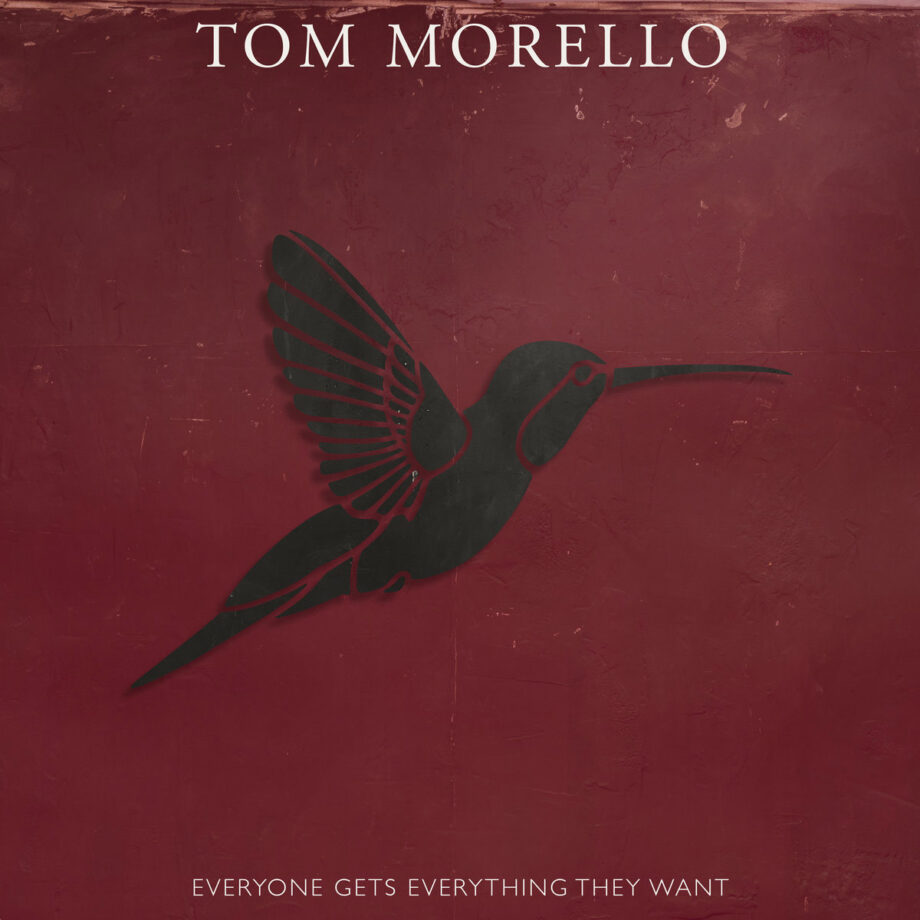
Tom Morello’s Everyone Gets Everything They Want is a late-career solo record, and it looks back over his whole catalog through a wide protest lens. It is his first solo rock album, out on September 25, 2026, and it answers the political moment head-on. I hear it less as a reinvention than as a summing-up of the roles he has played for decades: guitarist, agitator, and curator of heavy music with a message.
The timing matters here. For years his solo output was mostly side projects and one-off political singles, not full-length rock statements. This one is a 12-track set built on heavy rock and activism, with Serj Tankian, Kneecap and Beartooth appearing as guests.
That guest list makes the record cross-generational. It reaches people who know him from Rage Against the Machine and people who found him through newer metalcore and rap-rock crossovers.

The album also plays like a career survey. The range on display is impressive, and the songs hold up well as singles, but the record is far less convincing as a unified album. That gap between breadth and cohesion shapes how the whole thing lands.
The sonic palette is wide. I hear speaker-shaking beats and head-banging metal sitting next to delicate interludes. The guest voices push anti-fascist and solidarity themes through punk energy and protest folk instead of blunt sloganeering, which is the same mix of hard rock, rap, punk and political theater he has worked with for years.
The production leans on constant stylistic shifts. Heavy riffing gives way to rap and gospel fusion, then punk-inflected cuts, techno-rap and acoustic passages, with a piano ballad closing things out. That variety drives the album’s momentum, but its identity depends more on intent than on consistency.

Energy and conviction are the clearest strengths. His head and heart are in the right place, even though much of the writing stays close to the Rage Against the Machine and Audioslave template. I doubt the record will change how his work is remembered within the rock pantheon; the individual parts tend to stick more than the whole.
Listener reaction so far centres on the album’s range and its plain political stance. Many of the responses describe joy, righteous anger, resilience and a call to action, which fits the record’s activist intent. That tells me the audience here cares about message and momentum at least as much as genre purity.
Among metal-facing listeners, the collaborations are the main talking point. The Beartooth and Kneecap links draw the most attention, and “Unconquered” lands as a rave-rock crossover. The album reads less like a traditional solo guitarist record and more like a collaborative release that bridges scenes.
For modern metal and metalcore listeners, the record treats heaviness as a flexible political language rather than a fixed style. It pulls from metal, punk, hip-hop and acoustic protest traditions without watering down its message. That is a useful reminder that modern heavy music can still carry explicit ideological weight.
The patchwork structure is also why the album will connect unevenly with metal audiences. It works better as a collection of statements than as a tightly unified record. If you want message, guests and riff-driven variety, there is plenty here; if you want a cohesive metal album, its main strength is also its main limitation.