

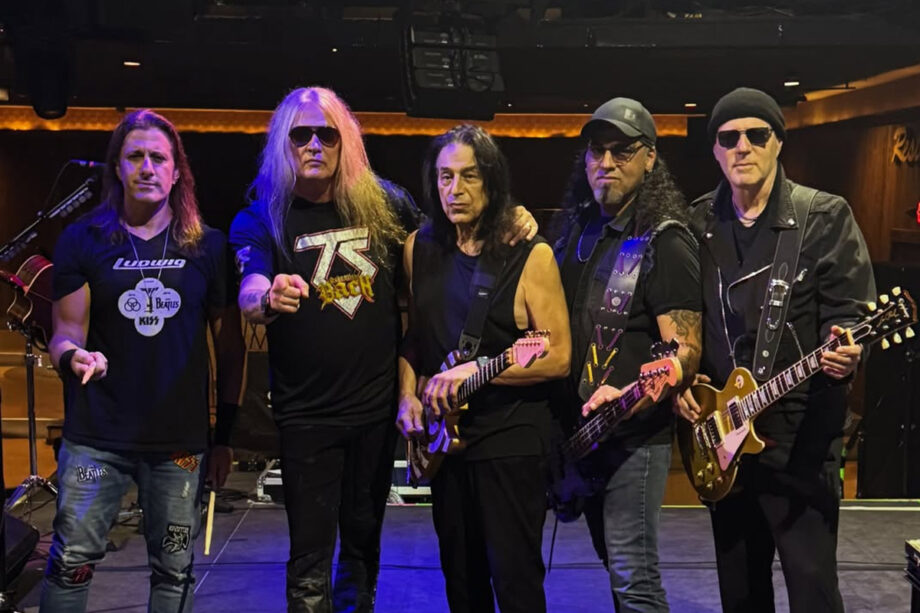
Twisted Sister’s August 28, 2026 show at Starland Ballroom in Sayreville, New Jersey was more than another reunion performance. It marked the beginning of a new live chapter, with Sebastian Bach taking over the frontman role and facing the difficult task of singing songs closely associated with Dee Snider.
The 17-song set wisely focused on familiar Twisted Sister material rather than trying to completely reshape the band. At the same time, the inclusion of Skid Row’s “I Remember You” and “Youth Gone Wild” gave Bach room to bring some of his own history into the performance. Those songs helped connect the old and new sides of the lineup without taking too much attention away from Twisted Sister’s catalog.

Bach was joined by longtime Twisted Sister guitarists Jay Jay French and Eddie Ojeda, along with Russell Pzütto and Joey Cassata. That connection to the band’s past mattered. This did not feel like a completely different group simply performing Twisted Sister songs under the familiar name. Instead, it was a reshaped version of the band trying to find out whether a major change at the microphone could work.
Bach approached the challenge with plenty of energy. Replacing Snider is not simply about reaching the notes, because Snider’s personality, attitude, and stage presence have always been a major part of Twisted Sister’s identity. Bach did not erase that difference, nor did he need to. His own aggressive performance style gave the songs a slightly different character while still fitting their loud and direct nature.
The reaction was understandably mixed. Some fans welcomed Bach’s energy and saw him as a natural choice, while others struggled with hearing Twisted Sister without Snider at the center. That disagreement was almost inevitable. When a singer becomes so closely connected to a band’s image, even a strong replacement can sound unfamiliar at first.

The Starland Ballroom was also a good setting for this first test. With a capacity of roughly 2,000 people, the room offered something more immediate than the larger stages the band is preparing to play. Instead of making the new lineup’s debut into an oversized event, Twisted Sister had the opportunity to establish its chemistry in a smaller and more direct environment.
Most importantly, the show gave fans something real to judge. Until August 28, much of the discussion had been about whether Sebastian Bach could front Twisted Sister. After Starland Ballroom, the conversation could finally shift toward how the lineup actually sounds and feels onstage.
This performance should therefore be viewed as a starting point rather than a final verdict. The chemistry can still develop, and larger shows will bring different pressures. What Starland Ballroom demonstrated is that Twisted Sister can move forward with Bach without pretending that nothing has changed. Dee Snider’s absence is impossible to ignore, but Bach brings enough personality of his own to make this new version worth watching as it develops.