

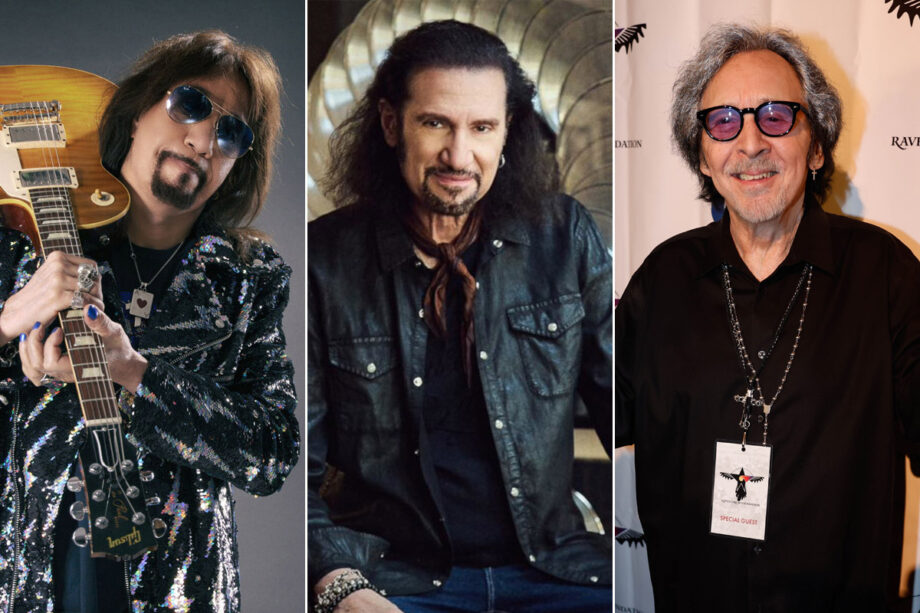
Former KISS guitarist Bruce Kulick recently discussed the financial details behind the band’s catalog and brand sale to Pophouse, confirming that he, Ace Frehley, and Peter Criss were not part of the massive payout. Kulick shared these insights during an interview on YouTube.
The discussion focused on how likeness rights and merchandise agreements are handled for former members who were not part of the primary acquisition deal.
When asked whether Pophouse has agreements or retainers with former members like himself, Eric Carr’s estate, Vinnie Vincent, Ace Frehley, or Peter Criss to avoid future legal issues regarding merchandise or events, Kulick explained the distinction between recorded music and likeness rights.

“I mean, it might be hard for the average fan to totally grasp this, but I’ll try to keep it as simple as possible,” Kulick said. “Any record I did and anything that appears on a record or anything, Universal owns that. That was part of my job and I was paid. I wrote a song, there’s some money, but that’s through a different way.”
Kulick then addressed how merchandise and likeness rights are handled differently from recorded music.
“Likeness-wise, for example, putting me on merchandise since they bought KISS from Gene and Paul, I don’t think they need their permission,” Kulick explained. “But they would need some contact with me in agreement with me or Eric Carr’s estate. And if they were using Vinnie, I guess they’d have to reach out to Vinnie. Anything on a record belongs to the record company. It can be marketed and put out without permission from any of the people that are part of that because it already existed.”

He continued, “If they were going to do other things possibly, especially if it had likeness or things like that, they don’t need my permission to show rehearsal footage or things like that. It was all chronicled and everything, and they’re not selling it. They’re just showing it to everybody.”
Kulick went on to clarify that he and other former members were excluded from the initial Pophouse acquisition deal.
“What would happen if they wanted to sell that stuff, I’m not really familiar, but I do know on merchandise they would have to reach out because I wasn’t part—and here’s the important part—I wasn’t part of the Pophouse deal,” Kulick continued. “Neither was Peter or Ace, of course. Regarding how Eric and Tommy are related to that, very confusing and I don’t know.”
“But here we are where Pophouse can put out all the records with Universal and do it however they like. If they’d like to, let’s say for Crazy Nights, that should be coming up next year. If they want to do a cool Crazy Nights image, they’ll speak to me, my manager, and I’m sure we can come to an agreement about a cool-looking T-shirt and no one’s going to get hurt.”
Kulick also noted how this dynamic explains why certain historical images of Ace Frehley and Peter Criss can be used without direct permission.
“But I think it’s another reason why you notice the images of Ace and Peter on the disc,” Kulick added. “They’re from the performance. They’re from the record or from the inner thing. They didn’t have to go to Ace’s estate, whoever that is now, or Peter, and say, ‘We want to use this.’ You know what I mean? And in fact, I saw Peter supported the record. He tweeted it on his Twitter or something. You know, he reshared what Kiss did. This is something he’s proud of. He should be proud of it. I’m happy about that because I know, you know, he may not jump into a lot of the other Kiss albums, but this one was kind of special.”
“But I still think it could all be, you know, figured out. You know, it all depends on their desire, how much they want to, you know, share and do,” Kulick said.
He also said that Peter Criss had publicly supported the release by resharing a KISS post, adding that the album was something Criss could be proud of.
Kulick’s comments reflect the complicated ownership structure behind one of the biggest deals in KISS history. KISS announced the sale of its music catalog, brand name, and intellectual property to Swedish entertainment company Pophouse on April 4, 2024. The deal was valued at more than $300 million.
The agreement included KISS’ back catalog, brand, likeness, trademarks, and signature makeup designs. The arrangement gave Pophouse control over the assets that form the commercial foundation of the band’s identity.
The deal did not represent an equal payout to every musician who had played in KISS. Gene Simmons and Paul Stanley controlled key KISS trademarks before the transaction. That meant the sale centered on assets connected to the two co-founders rather than on equal ownership among all former members.
Pophouse also acquired the rights needed to develop new projects based on KISS’ legacy. The transaction covered the band’s music catalog, name, image, and likeness, while future plans included a biopic, documentary projects, and an avatar-based performance experience.
There has been no major public indication that Ace Frehley’s estate received a share of the Pophouse transaction, and no recent report confirms that Peter Criss was included in the deal. For both musicians, the financial questions remain tied to royalties, merchandise, likeness rights, and the use of historical KISS material rather than to ownership of the assets sold by Simmons and Stanley.
Kulick said the arrangements could still change if Pophouse wants to use former members’ likenesses in new merchandise or projects. However, his comments indicate that the headline value of the sale did not extend evenly to every musician associated with KISS.