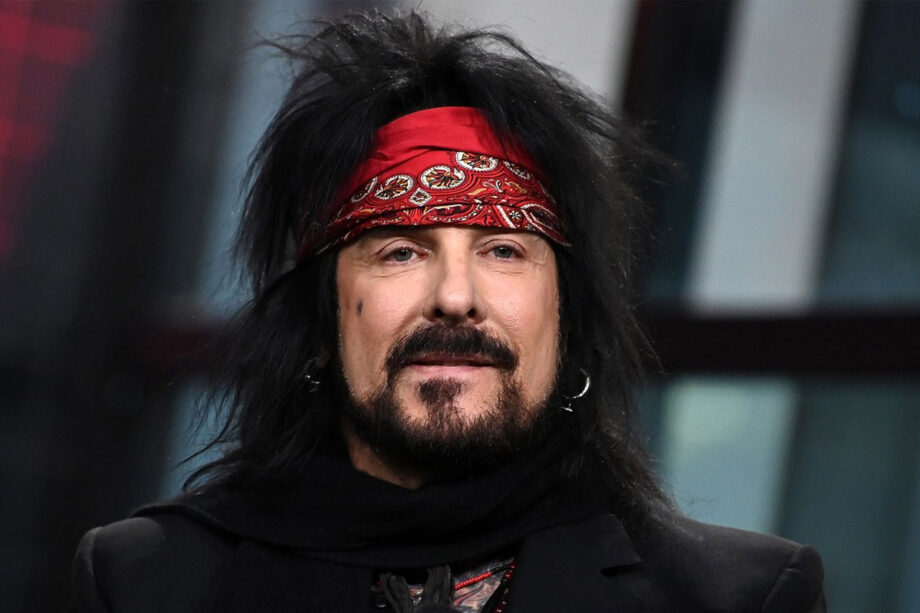
Nikki Sixx has a message for the modern rock world: strip it back.
The Mötley Crüe bassist shared a new statement to fans who had been asking him about new music, explaining why he has lost interest in the polished, overproduced sound that dominates much of today’s rock landscape.
“I get asked all the time about new music. As this musical journey continues to evolve, I find myself wanting to go back to where it all started. That raw, unfiltered sound. No bells and whistles. Just four guys in a room making a glorious racket.”

“Some of my favorite moments happen in rehearsal. Playing live off the floor, feeding off each other’s energy, and letting the music do the talking. Capture that magic, add a few overdubs, mix it, and let it loose into the world.”
“There are so many great underground bands bubbling up right now, and I love that raw energy. At this point in my life, I’m just not interested in overly polished, overproduced rock music. I want to hear the imperfections, the danger, the humanity. That’s where the magic lives. One song at a time…. Lightning in a bottle. That’s what I’m chasing.”
Sixx’s call for rawness is not a new position for him. It echoes the conditions that shaped Mötley Crüe’s very first recordings, when a young band with no major-label backing had little choice but to capture their sound quickly and cheaply. That scrappy approach ended up defining the group’s early identity, and Sixx has spent much of his career defending the value of imperfection over polish.

That history is well documented. Mötley Crüe’s 1981 debut Too Fast for Love was self-produced and initially released through the band’s own Leathür Records, with the original pressing carrying a raw, aggressive sound that matched the group’s growing reputation. The record was later re-released by Elektra Records and became the foundation of the band’s rise.
The sessions themselves were famously rough. Sixx recalled the stripped-down, seat-of-the-pants process behind the album. “We booked time in the cheapest studio [we could] find,” he said, adding that the band “spit out Too Fast for Love in three drunken days.”
Sixx has made a similar argument about contemporary rock in more recent years. He said in a 2022 interview that modern rock is often “extremely overproduced” and “ProTooled to death,” noting that he misses what he called “the slop” and the flat notes of a live performance.
His remarks also reflected an appreciation for newer acts working in a more immediate way. In the same interview, Sixx praised bands that record largely live off the floor, saying the approach feels real and communicates that the musicians mean what they play.
Sixx’s latest comments arrive amid a broader conversation in rock about the pendulum swinging back from digital perfection toward analog warmth and live-in-the-studio performance. His praise for the underground scene suggests he sees that instinct alive and well in younger bands, even as he pushes back on the mainstream sound he believes has sanded the danger out of rock music.