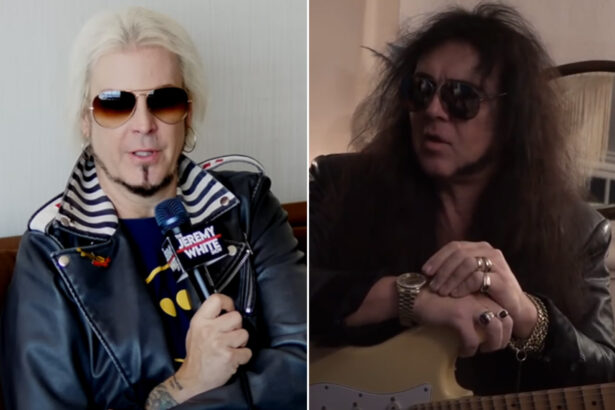


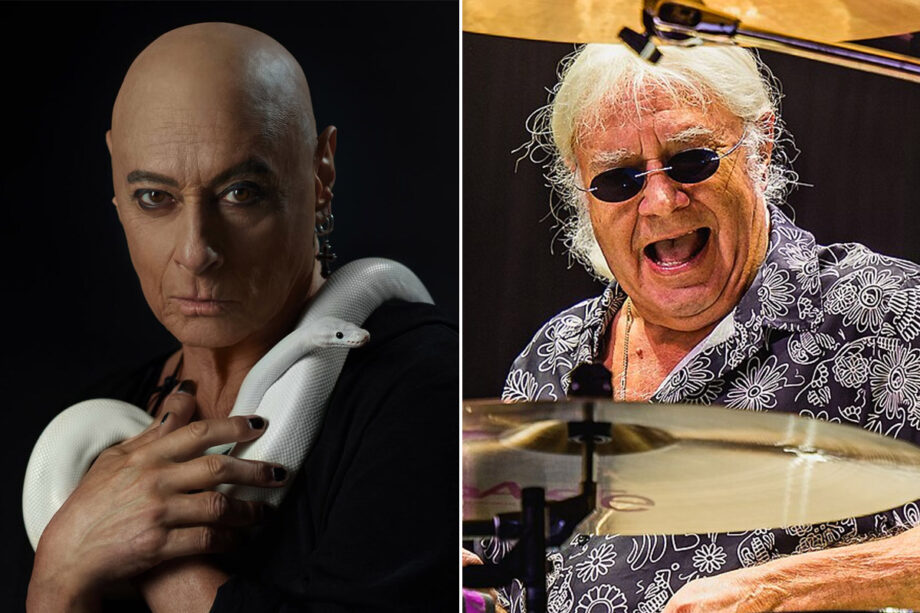
In a recent interview on Cassius Morris Official, former Deep Purple singer Joe Lynn Turner discussed his time with the band, addressing why drummer Ian Paice credited him as “the glue” that saved Deep Purple during a turbulent period.
During the interview, Turner was asked if he ever felt caught in the middle of guitarist Ritchie Blackmore’s relationship with Ian Gillan or Ian Paice, given the circumstances of his entry and exit from the band.
“No, I never felt I was caught in the middle of it at all,” Turner said. “What I was in the middle of it was… and it wasn’t from every member or anything like that. And I’m not going to name names here, but there was some edgy animosity simply because I think Ritchie pulled a power play and just said they all agreed when I ‘auditioned’ that, hey, he’s the right guy for the job.”

He explained that while fans often resist change and initially viewed him as a pop singer, this direction was what Blackmore wanted for the band.
“Even though people didn’t understand it, the fans, of course, they never like change,” Turner continued. “And they thought I was some pop singer. This is what Ritchie wanted to do. And I think maybe they were more angry at the fact that Ritchie was the leader and Ritchie wanted to go in this direction. But I think Slaves and Masters came out as a brilliant album. It has integrity. It is still hard driving. It is still really really amazing writing. I think somebody said it was let’s see more mature and sort of a polished version you know of of where Purple was going and it’s what Ritchie wanted and I think they had to acquies to that.”
Turner then addressed his close relationship with Blackmore and bassist Roger Glover, before recalling a meaningful compliment he received from drummer Ian Paice.

“So no I was never caught in the middle of any of that because Ritchie and I were very close at that point,” Turner added. “Roger and I have always been pretty close. Pacy said the most beautiful thing. And I have the article saved because I think it was just amazing. I’ll paraphrase it by saying he basically said Joe was the glue that held us together. If he didn’t, you know, if he didn’t do this album, Ritchie would have been off someplace else. He said, probably with Joe doing another album of some sort. He says, and we wouldn’t have had the chance to put the actual Purple back together again.”
He noted that he never expected long-term longevity with the band and was focused on collaborating with Blackmore on the music.
“And I could see that and I never thought I was like, you know, longevity,” Turner said. “I figured, hey, I’m here for an album. I’m going to do what I do. I’m going to collaborate with Ritchie, who was the main writer. And I didn’t feel anything like that. I wasn’t in competition, you know. Yeah, maybe it was Rainbow, but as we went over before, you know, you got three members of Rainbow and four members of Purple. You know, there’s going to be a mix there. There’s going to be a mix.”
Turner concluded by emphasizing that Deep Purple was always known for having different lineups, and that listeners should focus primarily on the music itself.
“What always gets me as an upshot is the fact that bands, and I love them dearly, but the Purple was a band that always had different incarnations,” Turner concluded. “Always. This was their trademark. you know. And this was another one. So, you kind of should just listen to the music. And fortunately enough, I think 30 some odd years later now, I get more compliments on that record by people who said, you know, I hated it at first and blah blah blah, but I put it on the other day and that it’s really I mean, yeah, it’s polished and it’s more commercial, but you still have your Wicked Ways songs like that. You still have your heavy stuff, you know, the lyrics and the melodies. It’s a great album. So, that’s what you’re supposed to be looking at really is the music. So no, never had that felt I was in the middle of some kind of stuff. I mean, you know, there was a feeling always of, yeah, we’d like that to to we we wish Gillan never left, but he did. He did.”
Turner’s comments shed light on a pivotal transitional chapter in Deep Purple’s history, when the band navigated major lineup changes and internal friction before eventually restoring its classic formation.
Turner joined Deep Purple in 1989 and recorded Slaves and Masters, which was released on 22 October 1990. The album was the band’s thirteenth studio release and their only record with Turner on vocals.
The album reached No. 87 on the Billboard 200, a modest result for a Deep Purple release. That commercial outcome helped fuel the long-running view that the record was a difficult fit for the band’s wider audience.
Gillan had left Deep Purple in 1989 and later returned in 1992 at the urging of Roger Glover, Jon Lord and Ian Paice to record The Battle Rages On. That album was released in July 1993 and became part of the final classic-era reunion with Gillan, Blackmore, Glover, Lord and Paice.
Gillan was unhappy that work on The Battle Rages On had already started with Turner, and he was brought in mainly to replace lyrics and vocal melodies. That detail underscored the tension that still surrounded the Blackmore-Gillan relationship and the instability that followed Deep Purple through the early 1990s.
Paice, Lord and Glover had wanted Gillan back for the band’s 25th anniversary tour, which made Turner’s bridge role more important in the transition between eras. In that sense, Paice’s “the glue” remark reflected Turner’s short but steadying presence during one of Deep Purple’s most unsettled periods.