


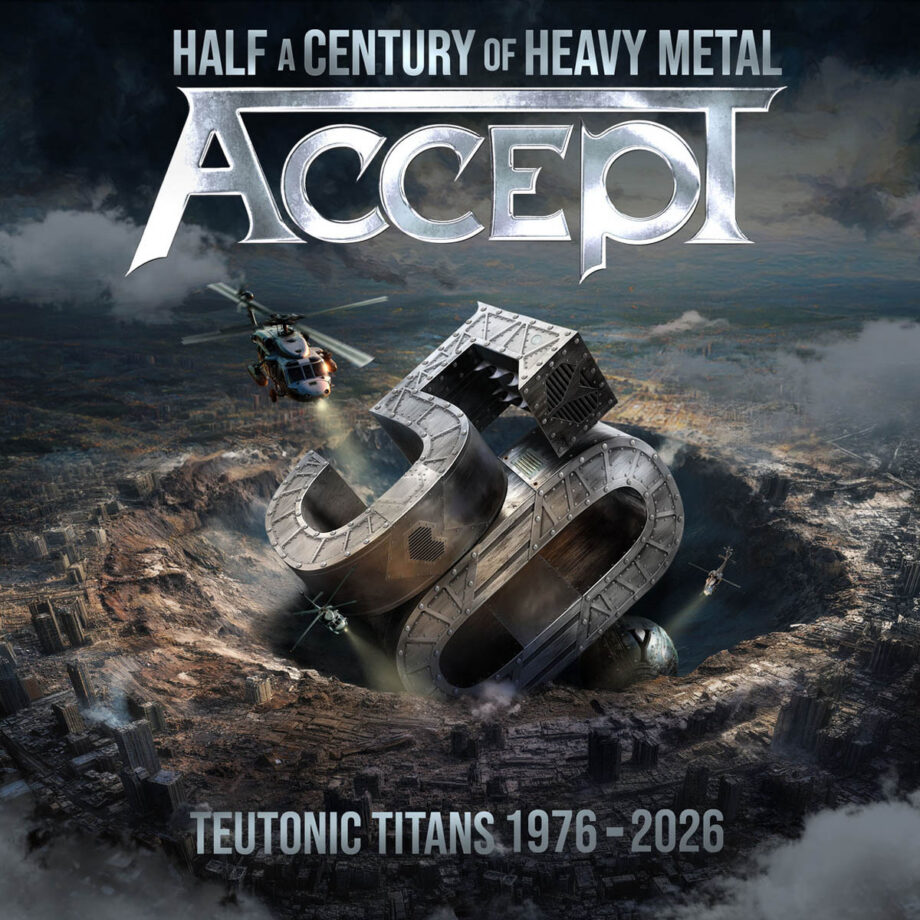
Accept’s Teutonic Titans 1976–2026 is a 50th-anniversary project rather than a conventional new studio album. Released on September 4, 2026 through Napalm Records, it brings together 19 re-recorded songs and around 50 guest musicians for a large-scale celebration of the band’s history.
The compilation arrives as Accept marks five decades in heavy metal. Instead of using the anniversary to introduce a completely new chapter, the band looks back at the songs that helped define its career, including “Fast as a Shark,” “Balls to the Wall,” and “Restless and Wild.”
The guest roster also connects different generations of metal and hard rock. Rob Halford, Kirk Hammett, Tobias Forge, Frank Bello, Ray Luzier, and Billy Corgan are among the musicians involved, turning the record into more than a simple retrospective. Their presence shows how far Accept’s influence has reached over the decades.

Teutonic Titans 1976–2026 consists of new recordings rather than remixes or previously unreleased archival versions. That distinction is important because the project gives Accept an opportunity to revisit familiar material with modern production and a wide range of guests.
The songs still depend heavily on the direct riffs, memorable hooks, and traditional heavy metal style associated with Accept. The guests bring different personalities to the performances, but the goal is clearly not to completely reinvent the original material.
The track selection also concentrates on important moments from the band’s catalog. Songs such as “Fast as a Shark,” “Balls to the Wall,” “Metal Heart,” “Breaker,” and “London Leatherboys” make the album feel like a tour through Accept’s history rather than a collection designed to highlight lesser-known material.

The early response has been largely positive, although the unusual concept will naturally divide some listeners. A 19-song collection of re-recordings with dozens of guests is an ambitious way to celebrate an anniversary, and the scale of the project helps separate it from a standard greatest-hits release.
At the same time, some listeners may question whether classic songs really need to be recorded again. That tension is part of what makes the album interesting: its appeal depends less on discovering new Accept songs and more on hearing familiar material presented through different combinations of musicians.
The importance of Teutonic Titans 1976–2026 is ultimately more historical than experimental. Accept is not using the album to announce a major change in musical direction. Instead, the band is looking back at five decades of work while showing how its music has connected with musicians from different generations.
That makes the record both a celebration and a statement about Accept’s place in heavy metal. Newer listeners receive an accessible introduction to some of the band’s defining songs, while longtime fans get a different version of material they already know well.
Teutonic Titans 1976–2026 may not reinvent Accept, but reinvention is not really its purpose. Its strength comes from treating the band’s catalog as something worth celebrating collectively, bringing together familiar songs and an unusually large guest lineup to mark 50 years of Accept.