


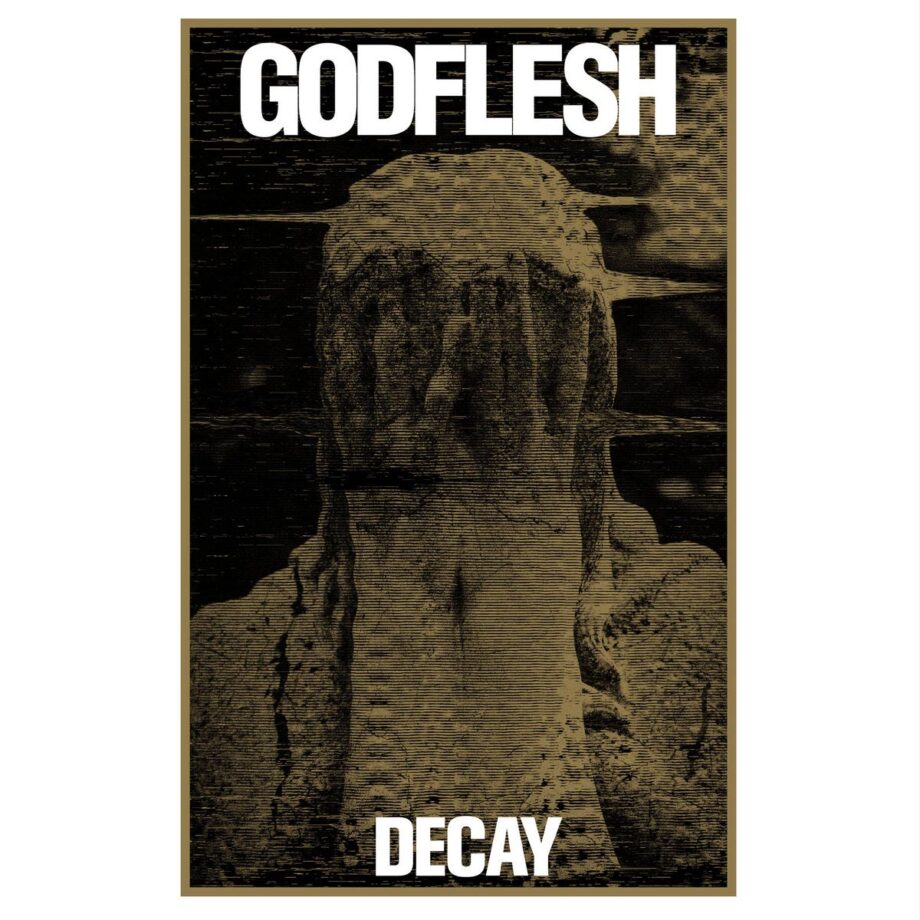
Decay is Godflesh’s tenth full-length album and one of the final records from Justin Broadrick and Ben Green. Released on September 25, it carries a sense of finality, offering a concentrated return to the duo’s industrial-metal identity rather than a major reinvention.
The material originated during the Purge sessions, but the album feels more considered than a collection of leftovers. It connects Godflesh’s industrial foundations with their experimental side, bringing those elements together through a focused, deliberately limited sound.
Across six songs, Decay builds its atmosphere through drone, feedback and mechanical rhythms. The music is restrained but heavy, with repetition creating a sense of confinement. Instead of building toward release, the album holds its tension, making sustained pressure central to the listening experience.

Familiar Godflesh traits remain firmly in place, although the emphasis on atmosphere gives the record a more inward-looking character. Its reduced approach feels purposeful, allowing small changes in texture and rhythm to carry weight without interrupting the overall mood.
That consistency is both the album’s strength and its main limitation. The narrow dynamic range keeps the songs connected, but it can also make a full listen feel punishing. Listeners looking for sharp contrasts or immediate hooks may find the pacing difficult, while those drawn to slow-building tension will have more to absorb.
There is clear discipline behind the repetition. The arrangements demand patience, allowing the emotional weight to emerge through accumulated sound rather than sudden shifts. Decay favors mood and control over stylistic expansion, maintaining its focus even when the music becomes uncomfortable.

As a final or near-final statement, the album fits a band whose work has long depended on abrasive commitment. It does not soften Godflesh’s sound for the occasion or reach for an easy sense of closure. Instead, it stays close to the qualities that have defined the duo, presenting them in a severe, concentrated form.
For metal and metalcore listeners, the record offers an example of how repetition and texture can sustain heaviness without constant changes in speed or structure. Its force comes from the persistence of the rhythms and the space around them, with each layer adding to the feeling of pressure.
Decay is a strong late-career Godflesh record built on atmosphere, cohesion and restraint. Its repetition and limited dynamics will divide listeners, but those choices also give it a clear identity. The album closes with the same uncompromising focus that drives the rest of it, leaving little relief from the weight it creates.