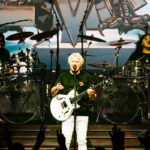


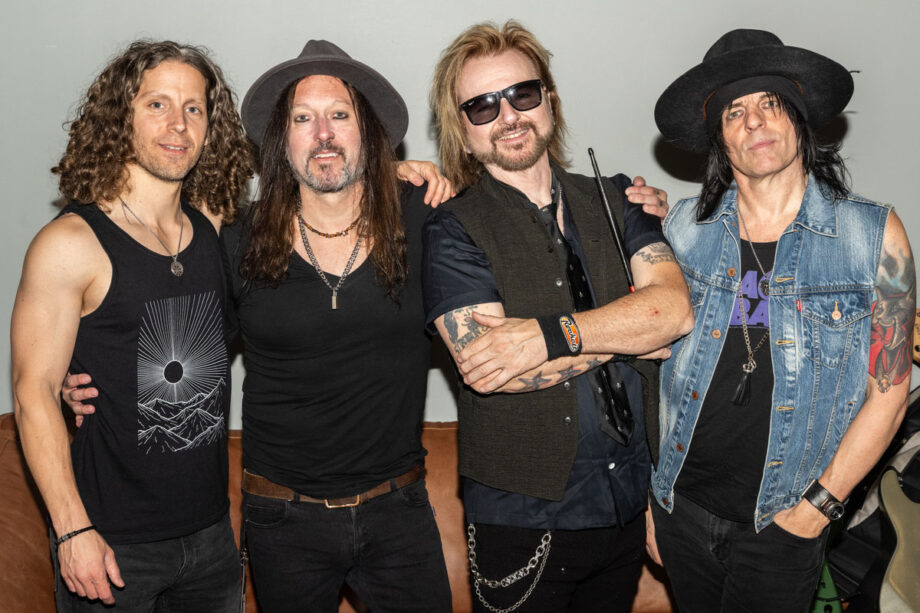
The Rockett Mafia’s August 14, 2026 date at Whisky A Go Go appears to have been positioned as a nostalgia-driven, catalog-focused event centered on Rikki Rockett’s Poison legacy, with coverage noting a full performance of Look What the Cat Dragged In at the West Hollywood club. The available reporting suggests the show mattered less as a one-off club date and more as a statement about how legacy-era glam and melodic hard rock continue to be repackaged for modern audiences.
The performance was built around an album-length tribute, which gives the show a clear curatorial angle rather than a standard greatest-hits format. Setlist records indicate a long, mixed sequence of Poison material and related hard-rock covers, reinforcing the impression of a deliberately old-school, fan-service-heavy night.
That framing made the event feel like part concert and part archival celebration, with the band leaning into the material’s era-specific identity instead of trying to modernize it away. For a metal readership, the significance lies in how the show used one of rock’s most iconic rooms to validate a retro set that trades heavily on memory, recognition, and scene history.

The show’s atmosphere appears to have been anchored by a crowd already primed for familiarity, with the Whisky A Go Go calendar and ticket listings underscoring a full evening of multiple acts and a club-scale setting. That kind of environment typically rewards singalong material and recognizable hooks, and the setlist suggests the band structured the night to encourage exactly that response.
Community-facing pages and event listings do not provide detailed qualitative crowd reports, but they do indicate substantial interest around the event and a packed, all-ages club context. The overall picture is of a room built for participation rather than distance, where audience energy would naturally hinge on recognition of the songs and the venue’s long-standing reputation as a hard-rock proving ground.

Available coverage points to a straightforward club production rather than a highly theatrical presentation, which fits Whisky A Go Go’s reputation and capacity more than an arena-style spectacle. The event materials identify a standard live-music setup at the venue, and the reporting emphasizes the performance itself over any elaborate staging concept.
Because the show was presented as a tribute-oriented, catalog-spanning set, the strongest production element was likely clarity of delivery rather than visual innovation. In that sense, the night seems to have relied on the strengths of a familiar room and a recognizable repertoire, with no evidence in the available sources of major technical problems or standout production flourishes.
The broader significance of the show is that it reinforces the continuing viability of legacy hard rock in a current live setting, especially when fronted by a name closely tied to an era-defining band. The performance was a complete run-through of a classic Poison album, which places the event squarely in the growing lane of anniversary and tribute-minded live programming.
For modern metal and hard-rock audiences, that approach is neither groundbreaking nor incidental; it reflects how older catalogs remain central to club-level live demand and fan identity. The reception across listings, set documentation, and secondary coverage points to a show that succeeded by meeting expectations tightly and keeping its focus on legacy material rather than reinvention.