

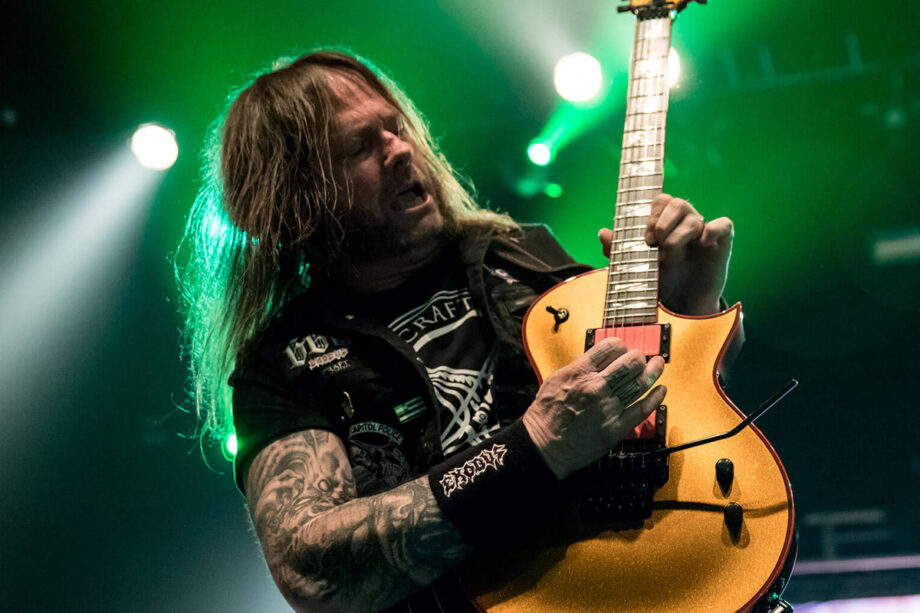
Gary Holt, guitarist for Exodus and Slayer, recently discussed Exodus’ place in thrash metal history in an interview. The conversation centered on whether the “Big Four” of thrash metal — Metallica, Megadeth, Slayer, and Anthrax — should be expanded to a “Big Five.”
“Of course,” Holt said when asked if Exodus would be in it. “No one else even has a right to claim it.”
“You know, I mean Testament sold a ton of albums in recent years since our reunion and theirs,” he continued. “They sold more. But they came years later. We’re the only other possible option.”

“Some fans are gonna say, ‘F*ck that,’ you know, Overkill or whatever,” Holt added. “And I always stand up for the Germans. Everybody always says who’s belong in it and always picking from the American groups. But I’m like, ‘What about Destruction? What about Kreator?'”
Holt’s remarks come at a particularly active time for Exodus. The band released its 12th studio album, “Goliath,” in March 2026 via Napalm Records. The record marked the return of vocalist Rob Dukes, who had not appeared on an Exodus album since 2010’s “Exhibit B: The Human Condition.” The reunion is a major factor behind the renewed energy surrounding the band.
Exodus was formed in the late 1970s. The band is widely recognized as one of the founding forces of the Bay Area thrash metal scene. The band’s 1985 debut album, “Bonded by Blood,” remains a defining document of the genre. It helped shape the direction of thrash metal for decades to come.

Despite this influence, Exodus has never received the same commercial success or mainstream recognition as the Big Four. Holt has frequently addressed the gap between the band’s influence and its recognition. The guitarist has described Exodus as carrying a massive chip on its shoulder, especially when compared to thrash rivals like Metallica and Megadeth. He has noted that Exodus plays faster and heavier than many of its peers. The band still does not receive the same level of credit.
The songwriting process for Exodus has always remained focused on the band’s own satisfaction. Holt has explained that the creative process is about making music to please the five members of the band. It is not about chasing outside expectations or industry trends. This approach has kept Exodus’ sound uncompromising over the decades.
Holt’s argument for a Big Five is not just about Exodus. He also pointed to European thrash bands such as Destruction and Kreator. The conversation about thrash metal’s hierarchy should extend beyond American groups. His comments reflect a broader ongoing debate within the metal community about which bands truly deserve recognition alongside the genre’s most celebrated acts.